Daisy Wildflower Bee
A Fresh, Friendly Face for Small Business Branding
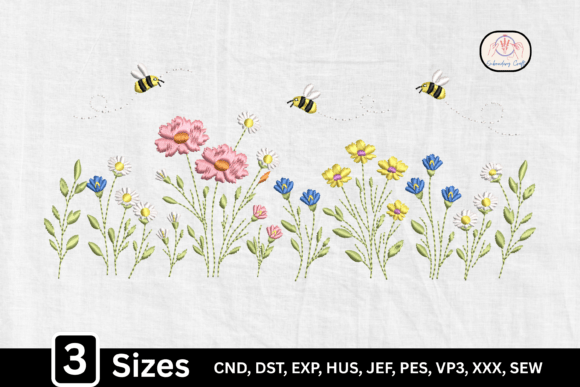
As an embroidery designer who’s digitized and stitched thousands of commercial projects—from café aprons to boutique tote bags—I opened Daisy Wildflower Bee expecting charm. What I found was more: a cohesive, garden-inspired machine embroidery design that lands squarely between playful and polished. The title alone evokes spring meadows, gentle pollinators, and organic growth—ideal for small businesses rooted in nature, wellness, craftsmanship, or local community. It doesn’t scream “bug” in the Bugs Insects category; instead, it whispers “handmade care,” “thoughtful detail,” and “quiet confidence.” That’s rare—and valuable—for brands building trust through visual consistency.
Where Daisy Wildflower Bee Shines in Real Merchandise
This embroidery file excels where authenticity meets wearability. On staff aprons for a florist or bakery? Yes—the daisy border frames the bee with balanced negative space, letting fabric breathe while reinforcing a fresh, approachable brand identity. As a chest logo on cotton work shirts for a garden center or pet wellness brand? Absolutely. Its moderate scale and clear floral outline translate cleanly at 3–4 inches wide, holding legibility without overwhelming the garment.
For embroidered patches—especially woven or standard twill-backed options—Daisy Wildflower Bee delivers strong recognition at 2.5 inches. The bee sits centrally, surrounded by stylized daisies that act as both decoration and structural support, reducing fraying risk along edges. On canvas tote bags? It anchors beautifully near the handle seam or centered low on the front panel—adding artisanal warmth without competing with printed text or logos. And for cap embroidery? Use it on the back strap or side panel rather than the curved front crown—its gentle curves adapt better to flatter surfaces, preserving stitch integrity.
Smart Placement Matters: Where to Pause Before Stitching
While versatile, Daisy Wildflower Bee demands thoughtful execution in high-stakes areas. Avoid scaling it below 1.75 inches for patches—it loses definition in the daisy petals and bee wing detail, risking a muddy or indistinct finish on dark uniforms or textured fabrics like duck cloth or heavy linen. On curved cap fronts or tapered sleeves, test stitch density first: dense fill areas (like the bee’s body or central flower) may pucker if not stabilized properly. Also, skip using it for tiny product labels or packaging accents under 1 inch—there’s simply too much visual information to resolve cleanly at that size.
Dark garments require careful thread color planning. A light yellow bee against navy denim works—but only if you pair it with high-contrast white or ecru daisies. Always test your thread colors in black and white first to verify tonal separation. And remember: this is a floral-border design, not a minimalist icon. It thrives where breathing room exists—so avoid cramming it beside dense text or other embroidered elements unless you’ve confirmed spacing in a printable mockup.
How Daisy Wildflower Bee Builds Brand Trust & Value
Customers don’t just buy embroidered items—they buy signals. A well-executed Daisy Wildflower Bee tells them your business values care, detail, and natural authenticity. For Etsy sellers and handmade brands, it elevates perceived product value: a tote bag with this design feels intentional, not generic. For cafés and boutiques, it reinforces visual storytelling across touchpoints—apron embroidery, staff caps, and gift tags all echo the same gentle energy, strengthening recall and emotional connection.
It also supports consistency without rigidity. Unlike rigid monograms or aggressive mascots, Daisy Wildflower Bee adapts gracefully across mediums: scaled down for a patch, enlarged for a tote, simplified in a single-color version for screen-printed merch mockups. That flexibility makes it a true design asset—not just a decorative flourish.
Practical Designer Notes for Commercial Use
Before cutting fabric or sending files to production, run these checks:
- Test in black and white first—to confirm contrast between bee, flowers, and background fill.
- Verify patch viability at your target size (e.g., 2.25" round or 3" oval) on actual twill or chenille base fabric.
- Review thread color contrast, especially on dark or heathered textiles—avoid blending tones like olive bee on sage fabric.
- Inspect spacing between daisy stems and bee wings—tight gaps can cause thread nesting or skipped stitches on low-tension machines.
- Confirm hoop size compatibility with your embroidery machine and intended placement (e.g., cap frames vs. flat hoops).
- Test on real fabric with your preferred stabilizer—lightweight cutaway works best for structured items like caps and aprons; tear-away suffices for stable cotton totes.
- Create a client-approved printable mockup before stitching—this prevents costly rework and aligns expectations early.
- Compare alongside existing design assets—does Daisy Wildflower Bee harmonize with your current logo, fonts, and brand palette?
- Confirm commercial licensing before use on merchandise for resale—this is a digital embroidery file intended for commercial embroidery, but always double-check terms included with your purchase.
Final Thought: More Than a Bee—A Brand Anchor
Daisy Wildflower Bee isn’t just another floral embroidery file. It’s a subtle yet confident expression of craft, seasonality, and grounded optimism—perfect for small businesses that want their merchandise to feel human-made, not mass-produced. Whether stitched on a barista’s apron or a florist’s reusable bag, it invites pause, appreciation, and recognition. Used intentionally—with attention to scale, fabric, and context—it becomes part of your brand’s quiet language. And in today’s crowded marketplace, that kind of thoughtful resonance? That’s not decoration. That’s differentiation.