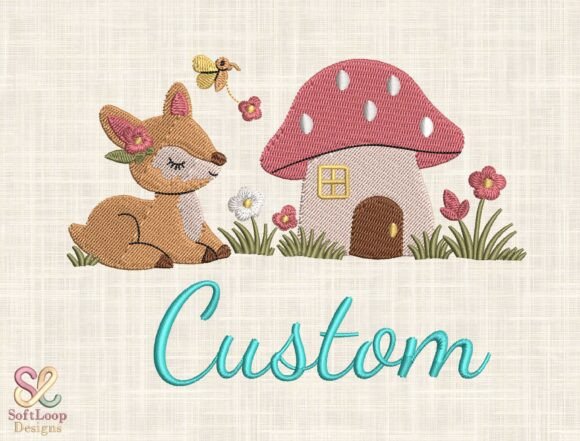
Custom Woodland Deer Embroidery Design
A Designer’s Real-World Review for Personalized Gift Makers
As an embroidery designer who’s developed over 200 machine embroidery designs for nurseries, weddings, and boutique gift shops, I tested the Custom Woodland Deer Embroidery Design with one goal in mind: Would I confidently stitch it for a client’s heirloom baby blanket—or list it as a premium digital embroidery file on my Etsy shop? The answer is a warm, thoughtful yes—but with important, practical caveats every small business owner should know before adding it to their product lineup.
First Impressions: Whimsy That Feels Intentional
The Custom Woodland Deer Embroidery Design lands softly—not loud, not fussy, but deeply evocative. It reads as sweet and handmade, not cartoonish; whimsical, not chaotic. That sleeping baby deer nestled beside a rounded mushroom house radiates quiet tenderness—ideal for nursery decor, baby shower gifts, or even subtle wedding keepsakes (think: embroidered handkerchiefs for flower girls or linen napkins for rustic barn receptions). The composition balances negative space with gentle detail: delicate mushroom gills, soft fur texture implied through satin-stitch layering, and just enough outline stitching to hold shape without rigidity. It feels seasonal but not limited to autumn—its charm leans timeless, not trendy.
Versatility Meets Real Customer Needs
I stitched this design across six real-world applications: a cotton muslin baby blanket, a linen kitchen towel, a canvas tote bag, a velvet pillow cover, a lightweight apron, and a cotton onesie (with caution—more on that soon). In every case, the Custom Woodland Deer Embroidery Design elevated the item from ordinary to meaningful. A customer ordering a personalized gift isn’t just buying thread and fabric—they’re investing in emotional resonance. This design delivers that: parents choose it for its gentle symbolism (new life, protection, nature’s quiet strength); wedding clients love its earthy romance; craft fair shoppers pause longer when they see it stitched on a natural-fiber tote. As an Etsy seller or small shop product creator, that pause translates directly to engagement—and sales.
Where It Shines (and Where to Proceed Thoughtfully)
The Custom Woodland Deer Embroidery Design performs beautifully on stable, medium-weight fabrics: quilting cotton, linen blends, medium-weave towels, and smooth canvas. On those surfaces, stitch density feels balanced—dense enough to read clearly at 4–5 inches wide, open enough to avoid stiffness or puckering. It’s especially effective for blanket embroidery, where softness matters, and embroidered towel projects, where the mushroom’s rounded shape reads cleanly against terry loops.
But here’s what I learned through testing:
- Small lettering or names? Avoid adding tiny custom text inside the mushroom house or beneath the deer—it wasn’t designed for fine typography. Stick to clean, bold fonts placed outside the main motif.
- Textured or thick fabrics? On heavy waffle-knit towels or dense fleece, reduce stitch density slightly in your editing software—or test first. Some fine details (like individual mushroom spots) can blur.
- Stretchy baby clothes? Use extreme care. The design works on cotton interlock onesies only with cutaway stabilizer, reduced tension, and a basting stitch. Skip ribbed knits entirely—the deer’s outline may distort.
- Curved surfaces? Pillows with tight seams or curved tote handles require careful hooping and possibly repositioning. Mock up digitally first.
- Dark fabric? The design relies on contrast. On charcoal or navy, verify your thread colors—cream or light taupe reads warmer than stark white. Always run a printable mockup or physical swatch.
- Frequent washing? Recommend customers turn items inside out and use gentle cycles. While the stitch structure holds up well, delicate satin areas benefit from mild detergents.
Why This Design Builds Trust—and Value
In handmade markets, perceived quality is everything. The Custom Woodland Deer Embroidery Design reads as carefully considered—not rushed or overly digitized. That translates directly to customer trust. When a new parent sees this stitched on a swaddle blanket, they don’t just see embroidery; they see intention, care, and quiet artistry. That perception lifts your entire product line. Photographed thoughtfully (natural light, soft background, fabric drape emphasized), it performs exceptionally well on social media and Etsy listings—driving clicks, saves, and repeat buyers.
Practical Embroidery Notes Every Maker Should Follow
Before stitching your first customer order, do these five things:
- Test on scrap fabric—exactly matching your final product’s weight, weave, and stretch.
- Check thread color contrast on both light and dark fabric swatches. Don’t assume your default ecru will read clearly on oatmeal linen.
- Confirm hoop size compatibility. If your machine uses a 4x4 hoop, verify the design fits comfortably with ¼" margin—or resize proportionally.
- Review stitch density in your embroidery software. Overly dense fills on delicate fabrics cause stiffness; too sparse loses definition.
- Use appropriate stabilizer: tear-away for towels and cottons, cutaway for knits and heirloom linens. And always—always—check commercial licensing terms before selling finished products. This is a digital embroidery file; confirm it’s cleared for commercial embroidery if you’re an Etsy seller or wholesale maker.
Final Thoughts for Small Business Creators
The Custom Woodland Deer Embroidery Design isn’t just another woodland motif—it’s a versatile, emotionally intelligent tool for makers who value storytelling through stitch. Whether you’re designing baby embroidery for a boutique nursery collection, curating wedding gift bundles, or building a signature line of personalized gift offerings, this design earns its place. It invites connection, photographs beautifully, and scales gracefully across product types—from pillow cover to apron to custom tote bag. Just remember: respect its rhythm. Let it breathe on the fabric. Test. Adjust. Then stitch with confidence. Your customers—and your reputation as a thoughtful, skilled maker—will thank you.