Cute Capybara Love
A Warm, Friendly First Impression with Strong Brand Potential
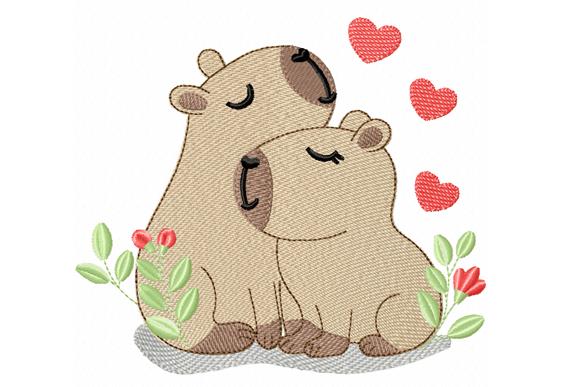
As an embroidery designer who’s digitized and stitched hundreds of small business assets—from café aprons to florist tote bags—I immediately recognized Cute Capybara Love as more than just a Valentine-themed motif. The title and description—“two adorable capybaras hugging with small hearts and flowers”—signal approachability, tenderness, and gentle charm. Visually, it reads as playful yet polished: not overly cutesy, not too literal, and refreshingly distinct from typical heart-and-rose clichés. For a small business owner or handmade brand, that balance is gold—it feels handmade without sacrificing professionalism, romantic without limiting appeal to one holiday.
Real-World Performance Across Merchandise Categories
Cute Capybara Love shines brightest where warmth and personality drive customer connection. On embroidered patches for a local pet boutique? Perfect—it adds instant character to denim jackets or reusable shopping bags. As a chest logo on staff aprons at a cozy bakery or flower shop? It softens formality while reinforcing a caring, community-oriented brand identity. For cap embroidery on front panels (think trucker hats for a creative studio team), the design holds up well at 2.5–3 inches wide—its rounded shapes and open negative space avoid overcrowding, and the hugging posture creates natural visual cohesion even when viewed from a distance.
It also translates effectively to tote bag design: centered above a monogram or shop name, Cute Capybara Love becomes a memorable signature touch—not just decoration, but a quiet ambassador for your values. On baby clothes or nursery-themed product packaging accents, its gentle scale and organic floral details support a premium handmade product perception. And for Etsy sellers building cohesive design assets, this machine embroidery design pairs beautifully with minimalist typography or botanical line art in printable mockups—creating visual consistency across digital listings and physical goods.
Where to Use Cute Capybara Love Thoughtfully
Like any well-intentioned embroidery file, Cute Capybara Love demands thoughtful placement. Avoid shrinking it below 1.75 inches wide for embroidered patches—those delicate flower outlines and fine heart details risk fill distortion or thread nesting on tight curves. Cap fronts with heavy curvature (like structured baseball caps) benefit from slight simplification or spacing adjustment—test the digital embroidery file on a curved stabilizer first. On dark uniforms or textured fabric like canvas or terry cloth, verify thread color contrast: pastel pinks or light yellows may fade visually unless paired with underlay or higher-density satin stitch.
Stitch density matters—especially for frequent-wash items like aprons or work shirts. If the original file uses dense fill in the capybara bodies or layered flower petals, consider lightening underlay or adjusting pull compensation during digitizing. Also, confirm hoop size compatibility before production; some versions may require a 4×4 hoop minimum, which limits placement options on narrow sleeves or collar tabs. Always test on real fabric—not just screen preview—with your intended stabilizer to assess how the design sits on stretch knits, stiff twills, or lightweight cotton.
How Cute Capybara Love Strengthens Brand Identity
This isn’t just a Valentine S Day embroidery design—it’s a strategic brand amplifier. When customers see Cute Capybara Love stitched onto a florist’s reusable tote or a pet brand’s bandana, they register kindness, attention to detail, and emotional intelligence. That builds trust faster than generic logos. Its consistent use across custom apparel—staff uniforms, event merch, customer thank-you gifts—reinforces visual recognition without shouting. Unlike overused icons, capybaras carry subtle novelty: they’re universally liked but rarely commercialized, making your small business merch feel intentional and distinctive.
For crafters and digital embroidery file buyers, pairing Cute Capybara Love with complementary design assets (e.g., coordinating border motifs or monogram frames) deepens handmade presentation. It invites storytelling—whether you’re branding a “Capybara Café” pop-up or launching a self-care line inspired by calm, connection, and gentle joy. That resonance boosts buyer engagement: shoppers don’t just buy a tote bag; they invest in a feeling, reinforced every time the embroidered patch catches the light.
Practical Embroidery Designer Notes for Business Use
- Test in black and white first—verify clarity of outlines and separation between capybaras, hearts, and flowers before committing to thread colors.
- Check small patch viability—resize the embroidery file to 1.75" and run a virtual stitch simulation to spot potential crowding or lost detail.
- Review thread color contrast—especially on dark or busy fabrics; high-contrast combos (e.g., navy cap + bright coral thread) increase visibility and longevity.
- Inspect spacing and underlay—tight areas between hugging capybaras need clean jump stitches and proper underlay to prevent gapping on knit fabrics.
- Confirm hoop size and format compatibility—ensure your embroidery machine supports the file type and that the design fits your standard hoops without re-hooping mid-stitch.
- Use appropriate stabilizer—lightweight cutaway for stable wovens, medium tear-away for polycotton blends, and fusible for tricky curves like cap fronts.
- Create a physical mockup before client approval—a stitched sample on actual fabric beats any digital proof when selling custom apparel or branded patches.
- Compare beside existing design assets—does Cute Capybara Love harmonize with your current logo, fonts, and color palette? Consistency strengthens brand recall.
- Verify commercial licensing—if using for resale merchandise, ensure the embroidery file permits commercial embroidery and small business merch distribution.