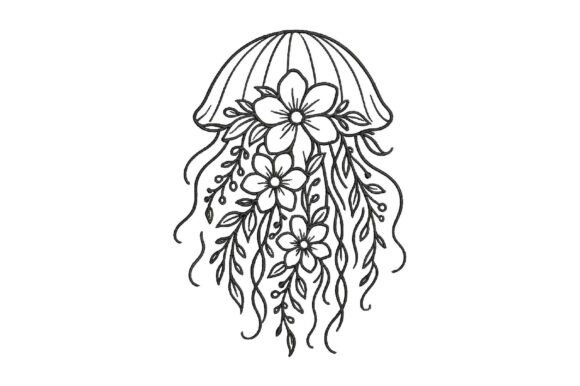
Floral Jellyfish Embroidery Design
A Craft Fair Designer’s First Look: Bold, Whimsical, and Spring-Ready
As someone who’s stitched 200+ craft fair booths—from Portland makers’ markets to Nashville holiday bazaars—I know instantly when a design has booth magnetism. The Floral Jellyfish Embroidery Design lands with quiet confidence: not loud, not cutesy, but undeniably memorable. It reads as modern botanical meets oceanic dream—elegant without being stiff, playful without leaning into kitsch. That balance is gold for spring-themed handmade products. Customers browsing for something “not another daisy or butterfly” pause here. It feels intentional, artistic, and just slightly unexpected—exactly what draws eyes in a sea of repeat motifs.
Where It Shines on Real Craft Fair Products
This isn’t a one-size-fits-all embroidery file. Its strength lies in thoughtful placement—and that’s where your eye as a maker matters most.
- Tote bag design: Centered on a natural canvas tote? Yes—but keep it medium scale (4–5 inches wide). Too large loses delicacy; too small vanishes. The jellyfish tentacles and floral tendrils flow beautifully along the grain, adding movement.
- Apron embroidery: Perfect above the pocket or subtly on the bib. The organic curves complement apron shapes better than rigid geometrics—and signal handmade care, not mass production.
- Tea towel embroidery: Works best on lighter linen or cotton weaves. Avoid heavy terry or looped textures—the fine floral details can blur. A single motif in the lower corner reads clean and giftable.
- Embroidered patch: Ideal. Clean outer edge, strong visual silhouette, and enough detail to justify a $8–$12 price point. Great for pin collectors, kids’ backpacks, or boutique denim jackets.
- Caps & curved surfaces: Proceed with caution. The jellyfish bell works well on front panels, but avoid placing delicate petals near seams or crown curves—they’ll distort. Test stitch density first.
- Pillow covers & pouches: A standout. The design’s vertical rhythm suits 12"x12" square formats and fits neatly on 8"x10" drawstring pouches. Feels premium, not generic.
What Makes It Sell—And What Makes It Stall
The Floral Jellyfish Embroidery Design earns attention because it’s legible at three paces. No squinting. No decoding. You see fluid shape + soft bloom + ocean grace—all in under two seconds. That’s critical when shoppers scroll past 47 other booths in under five minutes.
It photographs exceptionally well for Etsy listings and printable mockups—especially on ivory, sage, or sky-blue fabric. The contrast between translucent jellyfish form and defined floral centers gives depth without needing shadows or filters. Bonus: it scales cleanly across product types, so your digital embroidery file supports consistent branding across totes, patches, and pillow covers.
But—and this matters—it’s not infinitely repeatable. High stitch density in the floral clusters means longer run times per piece. Batch-producing 30 tea towels? Factor in stabilizer cost and thread changes. Don’t rush it. This design rewards patience, not speed.
Careful-Use Notes Every Embroidery Business Owner Should Know
Before cutting your first fabric swatch, ask:
- Is the stitch density balanced? Dense fill areas (like the jellyfish bell base or flower centers) may pucker on lightweight cotton or shift on textured towels. Use cutaway + tear-away combo stabilizer—not just basic fusible.
- How do thread colors hold up on dark fabric? Light pastel threads—common in oceanic palettes—fade visually on navy or charcoal. Test contrast with your exact thread brand and fabric dye lot.
- Does it retain clarity below 3 inches? Tiny stamens and fine tentacle tips soften or disappear on small items like keychain pouches or cap brims. If scaling down, simplify manually—or offer only the jellyfish outline as a mini variant.
- Is your hoop size compatible? Some versions of this design may require a 5x7 hoop minimum. Confirm before digitizing or purchasing the embroidery file.
Why It Strengthens Your Booth—and Your Brand
A well-executed Floral Jellyfish Embroidery Design does more than decorate—it elevates perceived value. Customers touch an embroidered tea towel and feel craftsmanship. They compare your $24 linen pouch to a competitor’s $16 plain version and choose yours—not just for beauty, but for story. This design whispers “thoughtful, seasonal, hand-selected,” aligning perfectly with spring energy without shouting “EASTER” or “PASTEL OVERLOAD.”
In your booth display, pair it with minimalist packaging, dried lavender sprigs, and matte ceramic mugs—it creates cohesion. On Instagram or Etsy, use one consistent color palette across all mockups (e.g., seafoam, oat, blush) to reinforce brand recognition. It’s not just a machine embroidery design; it’s a quiet signature.
Pro Designer Checklist Before Production
Don’t skip these—even if you’ve stitched 100 designs this year:
- Test the Floral Jellyfish Embroidery Design on scrap fabric matching your final product’s weight and weave.
- Check thread contrast under both daylight and booth lighting—LED market tents wash out subtle tones.
- Review spacing between elements: are petals too close to tentacles? Can stitching travel smoothly without jumps?
- Confirm hoop size compatibility and whether the design requires re-hooping mid-stitch.
- Inspect stitch density in high-detail zones—adjust if needed for your machine’s tension tolerance.
- Use appropriate stabilizer: cutaway for stretchy knits, tear-away for stable wovens, and always test on textured fabric like toweling.
- Create at least one real mockup—not just a digital preview. See how light catches the stitches in person.
- Compare fabric colors side-by-side: ivory vs. natural linen vs. ecru behave differently under thread.
- Verify commercial licensing terms before selling finished products—especially for wholesale or Etsy resale.
The Floral Jellyfish Embroidery Design isn’t just another embroidery file. It’s a conversation starter, a spring-ready differentiator, and a quietly confident addition to any serious handmade product line. Stitch it right—and watch customers reach twice.