Cute Piglet in Floral Sunhat Garden
A Charming, Versatile Embroidery Design for Small Business Branding
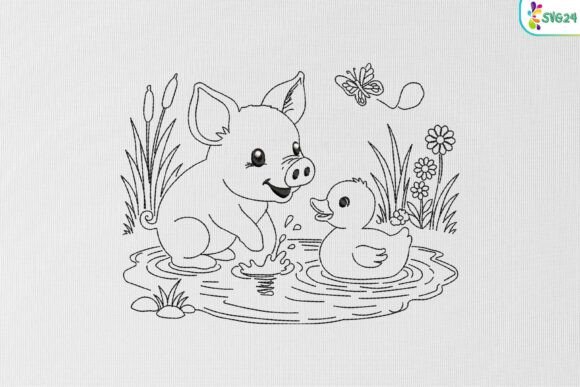
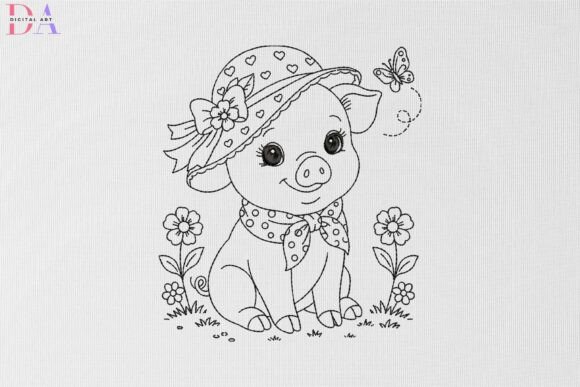
As an embroidery designer who’s developed hundreds of machine embroidery designs for small businesses—from neighborhood bakeries to indie pet brands—I approached Cute Piglet in Floral Sunhat Garden with both excitement and scrutiny. The title alone evokes warmth, whimsy, and a handcrafted sensibility—ideal for brands leaning into authenticity and gentle storytelling. Based on the description—“a cheerful piglet wearing a floral sunhat, surrounded by blooming flowers and a delicate butterfly”—this design clearly lives in the Baby Animals category, but its execution leans far beyond novelty. It’s not just cute; it’s intentionally composed for visual balance, brand cohesion, and real-world wearability.
First Impression: Friendly, Rustic-Chic, and Professionally Handmade
Cute Piglet in Floral Sunhat Garden reads as friendly first—its rounded forms and soft floral framing invite approachability. But it’s also rustic-chic: the sunhat suggests countryside charm without cliché, and the butterfly adds lightness and movement. This isn’t cartoonish or overly saturated—it feels like a curated illustration translated thoughtfully into stitch. For small business merch, that nuance matters. A café owner choosing this for apron embroidery signals warmth and attention to detail—not just “cute,” but intentionally welcoming. Likewise, a florist or handmade soap brand gains instant visual alignment with nature, care, and artisanal values.
Real-World Performance Across Merchandise Types
This design shines where personality meets practicality. As an embroidered patch, it holds up beautifully on denim jackets, tote bags, and shop signage—especially when stitched with high-contrast thread colors (e.g., navy piglet + butter-yellow hat on natural canvas). On staff apron embroidery, its vertical flow fits naturally above pockets or along waistbands. For cap embroidery, the centered composition works well on front panels—but keep minimum size in mind (more on that below). As a tote bag design, it scales elegantly from 3” to 5”, maintaining legibility and charm. And on product packaging accents—think fabric tags for handmade candles or seed packets—it adds tactile brand distinction without overwhelming.
For boutique merchandise and Etsy sellers, Cute Piglet in Floral Sunhat Garden supports consistent brand identity across multiple touchpoints: embroidered labels on organic cotton onesies, sleeve details on crewneck tees, or even subtle chest accents on linen uniforms. Its balanced negative space allows breathing room—critical for custom apparel that must feel premium, not cluttered.
Where to Use It Thoughtfully—Not Everywhere
Like any detailed machine embroidery design, Cute Piglet in Floral Sunhat Garden has boundaries. Avoid using it smaller than 2.5” wide on curved surfaces (like cap fronts) unless you’ve tested stitch density and thread tension thoroughly—fine floral outlines and butterfly wings may blur or pucker. On dark uniforms or textured fabrics (e.g., heavy twill or linen blends), confirm that light-colored threads (like pale pink or mint) retain clarity—test with proper stabilizer and under good lighting. Also, avoid pairing it with dense text or logos in tight proximity; its charm lies in its standalone presence.
Frequent washing is another consideration. While the design itself doesn’t include ultra-fine satin stitches or micro-details that snag easily, high stitch density in flower clusters means stabilizer choice and fabric prep are non-negotiable. Always test on the exact fabric texture your client will use—especially for aprons or work shirts meant for daily wear.
How It Strengthens Brand Identity and Customer Trust
Small business buyers don’t just buy products—they buy feelings, values, and recognition. Cute Piglet in Floral Sunhat Garden reinforces handmade product credibility through its illustrative quality and gentle asymmetry—no sterile vector perfection here. That authenticity builds trust. When customers see it repeated across a bakery’s tote bags, staff aprons, and seasonal gift tags, they subconsciously register consistency, care, and intentionality. Visually, it elevates perceived product value—a simple cotton tote becomes “the one with the piglet,” sparking smiles and repeat engagement.
For digital-first sellers, pairing this digital embroidery file with a clean printable mockup helps clients visualize branding before production—boosting confidence in their investment. And because it sits comfortably between playful and refined, it avoids alienating older demographics while still resonating with younger, design-conscious shoppers.
Practical Designer Notes Before You Stitch
- Test in black and white first—confirm silhouette strength and contrast without color distraction.
- Check small patch size performance—reduce to 2” and assess if key elements (butterfly, hat brim, flower centers) remain legible.
- Review thread color contrast—especially for light-on-light or dark-on-dark applications.
- Inspect spacing—ensure no floating elements risk stitching errors or weak anchoring.
- Confirm hoop size compatibility—does it fit standard 4x4 or require larger? Adjust placement accordingly.
- Test on real fabric—not just stabilizer swatches—with the exact needle, thread, and machine settings your shop uses.
- Create a client-facing mockup before finalizing—helps align expectations and reduces revision rounds.
- Compare beside other design assets—does it harmonize with your existing logo, fonts, or secondary patterns?
- Confirm commercial licensing before deploying on paid merchandise—verify usage rights for commercial embroidery, resale, and branded product labeling.
Remember: even the most charming embroidery file is only as strong as its execution. Cute Piglet in Floral Sunhat Garden offers genuine versatility—but its success hinges on thoughtful adaptation, not automatic application. Used with intention, it becomes more than decoration. It becomes part of your client’s story.